
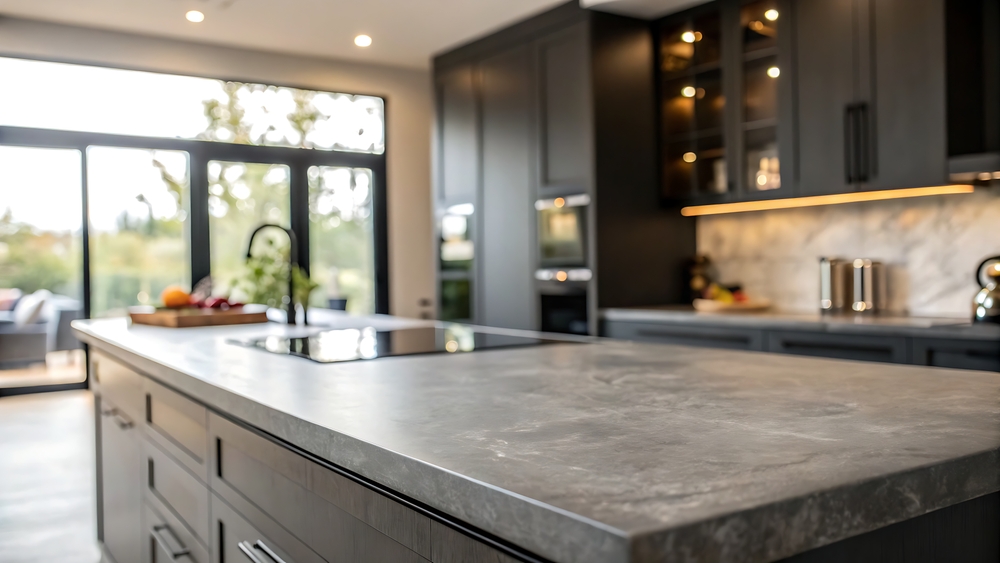
Selecting the ideal countertop for your bathroom or kitchen is a significant choice. Since you will be using this surface daily, it must complement your lifestyle and continue to look fantastic for many years to come. The market for countertops is dominated by three materials: marble, granite, and quartz.
Everybody has a unique personality, set of strengths, and weaknesses. This guide breaks down everything you need to know about these popular options so you can make the best choice for your home.
Understanding Your Three Main Options
Granite is a naturally occurring stone that is extracted straight from quarries worldwide. Because they evolved underground over millions of years, each slab is entirely unique. Patterns, veining, and color variations caused by nature will be visible to you.
Although it forms differently from granite, marble is also a naturally occurring stone. It begins as limestone that undergoes changes in the Earth’s interior due to heat and pressure. Marble is renowned for its exquisite veins and swirls, which are produced by this procedure.
Quartz worktops are manufactured because they are engineered. About 90–95% of them are made out of pulverized natural quartz crystals combined with colors and resins. This is not to be confused with the natural stone quartzite. The engineered product is what people mean when they talk about quartz countertops.
Durability: Which Material Lasts Longest?
Because you’re investing in something that should last for decades, durability is important. Let’s evaluate each material’s resilience to everyday use. If you’re investing in kitchen design in Freehold, durability matters because the materials you choose need to handle daily wear and still look great for decades.
Scratch Resistance
Both quartz and granite have high hardness grades. Vegetables can be chopped straight on them without breaking them, but we still advise using a cutting board to keep your blades safe. In its native state, granite is marginally harder than quartz.
Granite and quartz are harder than marble. If you’re not careful, a sharp knife can scratch it. Save marble for low-traffic areas like bathroom vanities rather than bustling kitchens if you like the design but are concerned about scratches.
Heat Tolerance
Granite is an excellent heat-resistant material. A hot pan from the stove can be placed directly onto granite without any issues. Your cookware won’t damage the natural stone because it was developed in extremely hot and cold conditions.
Because marble is a natural stone, it also withstands heat effectively. On the other hand, abrupt temperature swings may eventually lead to issues.
Because of the resin binders, quartz is more heat-sensitive. An extremely hot pan may cause surface discoloration or burns. Using hot pads or trivets is advised by the majority of manufacturers. This does not imply that quartz is brittle, but it does require a little more care when working with hot objects.
Stain Resistance
Here’s where quartz truly performs. Because of the non-porous surface, liquids can’t permeate through. If you spill olive oil, coffee, or red wine, you can clean it up without leaving any stains for hours. Quartz is forgiving for hectic homes.
Because granite is naturally porous, it can absorb liquids and stains. Granite, however, becomes extremely stain-resistant when properly treated. Depending on use, you’ll need to reseal it on a regular basis, usually once a year or so.
Of the three, marble has the highest porosity. It stains easily, especially when exposed to acidic materials. Wine, tomato sauce, and lemon juice all create stains. Marble needs to be more careful about promptly wiping up accidents, even after sealing.
Chip and Crack Resistance
Dropping something heavy on a corner or edge can cause all three materials to chip. The strength of granite and quartz’s resistance to chipping is comparable. Because marble is softer, it is more likely to chip.
When placed correctly, these three materials rarely crack. Usually, they are not caused by problems with the stone itself, but rather by structural problems with cabinetry or inadequate support during installation.
Maintenance: How Much Work Is Required?
Your lifestyle should heavily influence your choice. Some people don’t mind a bit of upkeep, while others want to install and forget.
Daily Cleaning
The easiest to maintain on a daily basis is quartz. Use a mild cleanser or soap and water to clean it. That’s all. No difficult routine, special products, or sealing are needed.
pH-neutral cleansers are necessary for granite. Steer clear of harsh or acidic substances as they might gradually erode the sealant. Cleaning on a daily basis is easy, but you need to choose your products a little more carefully.
Marble is the most demanding material. Only pH-neutral cleansers designed especially for natural stone should be used. The surface will be etched by acidic cleansers, leaving behind dull stains that are impossible to remove.
Long-Term Care
Quartz requires virtually no long-term maintenance beyond regular cleaning. The engineered surface stays consistent year after year.
Granite needs resealing. How often depends on the specific granite and how much use it gets. Test by dropping water on the surface – if it beads up, the seal is good. If it absorbs within a few minutes, time to reseal. Many homeowners make this an annual ritual.
Marble also needs sealing, often more frequently than granite. Beyond that, marble can develop an aged patina over time. Some people love this look and consider it character. Others prefer the pristine appearance and may need professional refinishing every few years to maintain it.
Etching Concerns
When acidic materials erode a polished surface, etching happens. For quartz, this is not a problem. Though extended exposure to acids is bad for the sealant, granite has some resistance to etching.
Marble is fairly simple to clean. Wine, vinegar, lemon juice, and even some fruits will immediately dull the polish. Unless the surface is expertly refinished, these stains are irreversible. This is acknowledged by many marble enthusiasts as a natural development of the material.
Appearance: Finding Your Style
Beauty is subjective, but each material offers different aesthetic possibilities. At Driftwood Design, we can help you coordinate your countertops with kitchen cabinetry in Asbury Park and the surrounding areas.
Pattern and Variation
Granite gives you bold, busy patterns with lots of movement. Each slab is unique. You may notice striking veining, swirls, or speckles. Common blacks, browns, and unusual blues and greens are among the colors. Granite is a great option if you want a unique appearance.
Marble is famous for its elegant veining. Compared to granite’s busier appearance, the patterns are typically more linear and flowing. Marble is available in a variety of colors, including green, black, pink, and the classic white marble with gray veining. Compared to granite, the appearance is typically more formal and elegant.
Quartz offers the most control over appearance. You can select from recurring designs that are consistent between slabs because they are made. Do you want marble’s appearance without the upkeep? It can be mimicked by quartz. Do you like subtle patterns or solid colors? Quartz also has these qualities. Even variants with glitter or dramatic veining are available.
Edge Profiles
From straightforward straight edges to ornamental curves or bullnose forms, all three materials can be manufactured with a variety of edge profiles. Here, material constraints are less important than your own taste and design aesthetic.
Thickness Options
Standard thickness is typically the same across all three materials. Your fabricator can also create a thicker look by laminating edges, which works equally well with granite, marble, or quartz.
Cost Comparison: What Fits Your Budget?
Pricing varies widely based on your specific choices, but understanding the general cost structure helps with planning.
Material Costs
Quartz typically falls in the middle range. Because the production process is regulated, prices remain largely stable. Premium brands’ exotic hues or designs are more expensive than simpler alternatives.
Granite has the widest price range. Rare colors imported from distant quarries cost a lot more than common colors that are easily accessible. The variation in pricing can be dramatic.
Marble generally sits at the higher end, especially for premium varieties like Carrara or Calacatta. However, some marble can be found at moderate price points, particularly if you’re open to different colors and patterns.
Installation Costs
All three materials have comparable installation prices. Whichever you select, you are paying for expert fabrication and installation. For optimal performance, all three need to be professionally installed.
Long-Term Value
Over time, take maintenance costs into account. Quartz has low maintenance costs. Granite needs sealing products on a regular basis. To preserve its appearance, marble may require sealing in addition to occasional expert refinishing.
Think about resale value, too. All three are desirable materials that appeal to homebuyers. Quartz and granite are seen as practical choices. Marble brings luxury appeal but might concern buyers who worry about maintenance.
Making Your Decision: Which Material Is Right for You?
- Choose Quartz: If you want low maintenance and high performance. Quartz makes sense for people who want beauty without hassle, have busy families, or are serious home cooks who are concerned about stains. It’s also excellent if you prefer recurring patterns or particular hues that aren’t available in natural stone.
- Choose Granite: If you want natural stone character and don’t mind some upkeep. Granite is perfect for people who love knowing their countertop is unique and appreciate natural materials. It has a remarkable range of appearances and manages heat well.
- Choose Marble: If you prioritize beauty above all, and accept that it requires care. Marble is a good choice for those who appreciate sophisticated, traditional style and don’t mind maintaining their surfaces. It looks gorgeous in kitchens, baths, or powder rooms where the homeowner is dedicated to careful use and upkeep.
How to Choose the Countertop Material That Fits Your Life
There’s no universally “best” countertop material. The right choice depends on how you live, what you value, and what kind of relationship you want with your surfaces. Imagine your daily routine with each material. Ask fabricators about their experiences with practical applications. Having installed all three in their own houses, many are able to provide candid opinions.
Your countertops will be part of your daily life for many years. Take time to choose the material that fits not just your design vision, but your real life too. Whether you go with engineered quartz, natural granite, or elegant marble, picking the right one means you’ll be happy with your choice for decades to come. If you want help selecting countertops that truly fit your lifestyle and design goals, contact Driftwood Design today to get expert guidance from start to finish.